
Disclosure: All products are chosen and tested by our editors; gifting or affiliate links never influence our opinion.
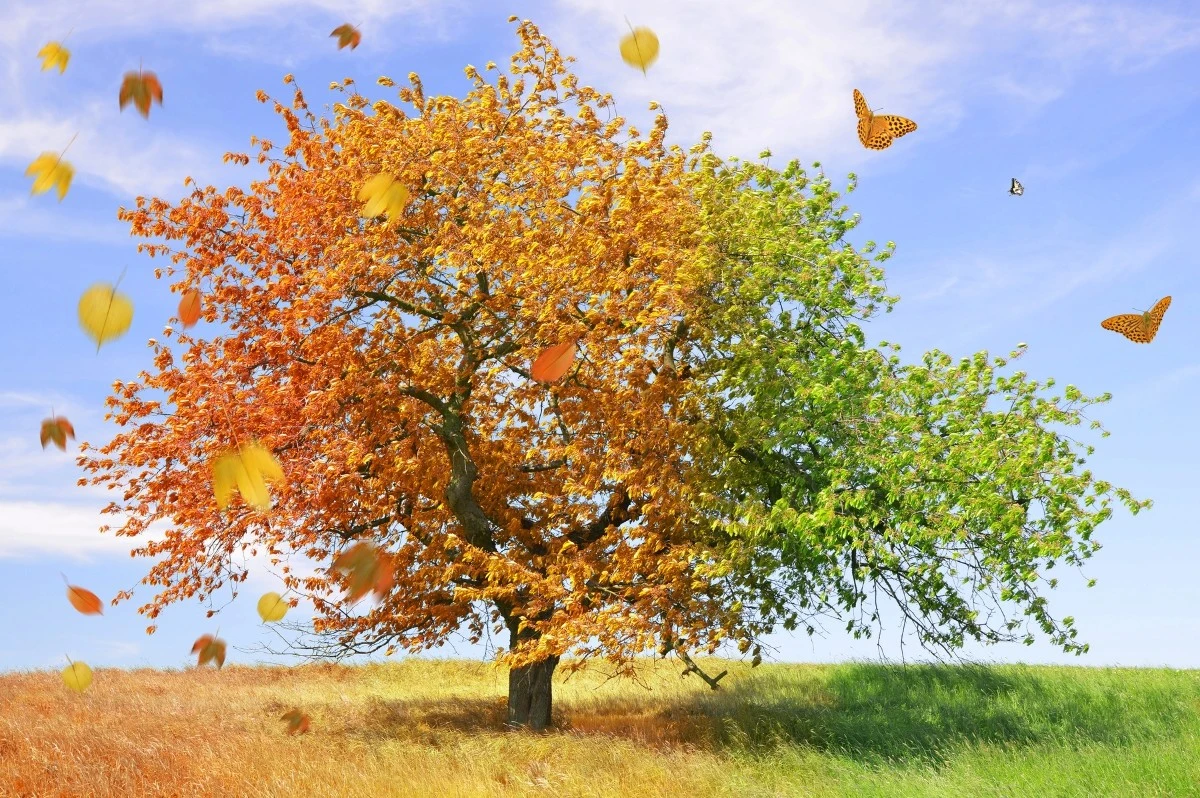
As the seasons change, it can be a natural time to reflect on our own growth, the things we’re ready to let go of and the lives we want to create.
In these Words of Wisdom, Amanda Rabor, a Positive Psychology Coach with a background in psychology, explores the connection between seasonal change, self-development and the importance of making space for ourselves in an increasingly busy world.
Reflections on change, growth, freedom and the seasons of ourselves.
What does a change of season mean to you?
Have you ever stopped to think about what it does to your body, your physicality, your mental state, your nervous system, or even your overall sense of wellbeing?
Do you notice how your body feels as the days become shorter and the nights become longer? Do you welcome the change, or do you resist it? Do you look forward to autumn and winter, or do you find the transition from summer quite jarring, perhaps even depressing?
And what about the movement from winter into spring, or spring into summer? How do those transitions affect you?
Everything on this Earth moves in cycles. The seasons, the moon, the stars, nature, and of course, ourselves. We are part of these cycles, whether we consciously acknowledge them or not. And I find myself increasingly curious about how these changes affect our mood, our thinking, our motivation, our development, and sometimes even our inability to move forward.
You may not believe in astrology or the influence of the stars, and that’s absolutely fine. But I do think there is something interesting about the themes that emerge when we pay attention to what is happening around us and within us. We have recently experienced eclipses, full moons and periods that astrology describes as retrogrades. Whether you attribute any significance to these happenings or not, I find it fascinating how conversations with people often reveal similar feelings and experiences around change, uncertainty, reflection and personal growth.
There seems to be a real theme at the moment around the self.
Who am I? What do I need? What do I want? What would make my life more fulfilled, more meaningful, more purposeful? What do I need to change to make my life better? Or simply, to make my life more?
And perhaps one of the most important questions is: What would it feel like to put myself first?
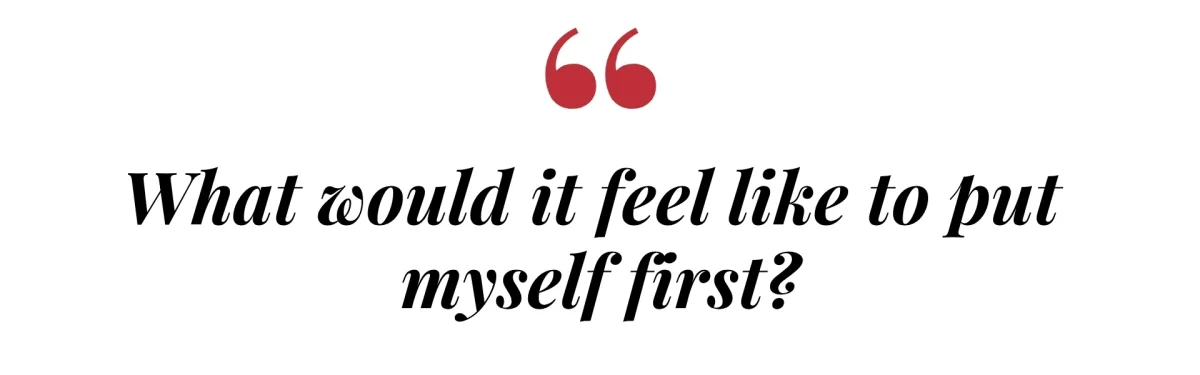
So many people struggle with this question because putting yourself first is often associated with selfishness. But is it really selfish to care about yourself? To make sure that you are included in the picture of your own life? That you are seen, heard, considered and valued? That your feelings are expressed rather than constantly suppressed to accommodate the needs and expectations of others?
What does it mean to stop allowing other people to impose their will upon you and begin making space for your own?
I think these are some of the changes many people are experiencing or beginning to question. And to me, this is growth.
It’s about stretching our growth edges. In our relationships, at work, within our families, and perhaps most importantly, within ourselves. It’s about learning to take up space without apologising for being there. Making sure we are included in the decisions, experiences and relationships that shape our lives.
But change is not always comfortable.
In fact, change can be a very powerful and sometimes deeply unsettling experience. It can take us into some very dark and challenging places, where we are forced to examine our shadow side, our weaknesses, our fears and the parts of ourselves we would rather not acknowledge.
It asks us to be truthful about who we really are.
And that truthfulness has to work both ways.
We must be willing to acknowledge our weaknesses, but equally willing to recognise our strengths. To see the good in ourselves, to appreciate what we bring into the world, and to celebrate what we have achieved without feeling that we are boasting or blowing our own horn.
And really, what’s wrong with blowing your own horn?
If you don’t blow it, who will?
I think we have to learn to become our own biggest cheerleaders in this life. Not through arrogance or self-importance, but through genuine appreciation of ourselves. Through knowing our worth and recognising that we are continually evolving.
Each cycle offers us an opportunity to shed an old skin and grow into something new.
The Season of Letting Go
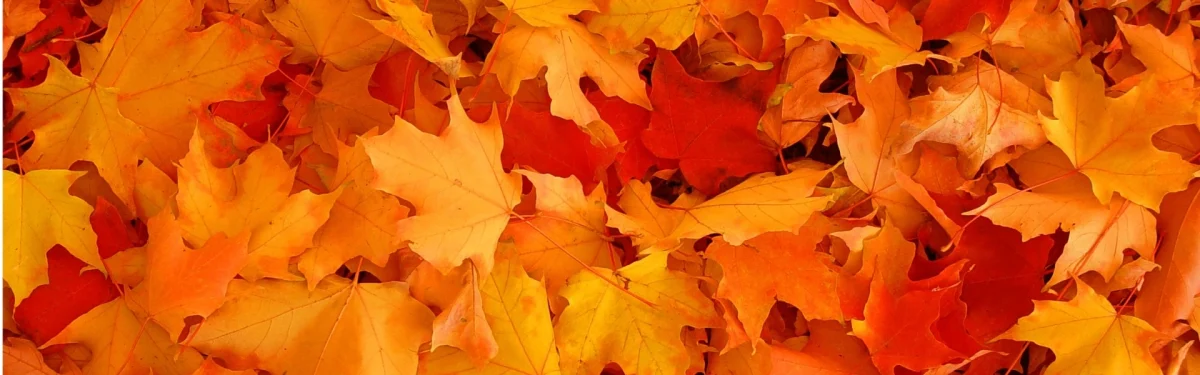
I think of autumn as a time of preparation. Nature begins to withdraw. The trees shed their leaves, the earth slows down, and animals begin preparing for hibernation.
There is something quite beautiful about that process.
I love each season separately, although I don’t always feel ready for the next one.
I find that particularly interesting about myself because I actually enjoy the darker, quieter months. I enjoy being alone. I enjoy hibernation. I love the opportunity to retreat into myself, away from the noise and expectations of the outside world.
For me, there is something deeply comforting about the darkness.
It’s in those quieter spaces that I can explore my thoughts, examine where I am in my life, and begin discovering where I want to go next. I don’t always need to be doing something. Sometimes I just need to be still, to think, to feel and to allow things to unfold.
And when I’m ready, I can begin putting those thoughts into action.
Sometimes, when winter begins giving way to spring and the days start becoming longer again, I find that I’m not quite ready to emerge. I still want to hibernate. I still want the darkness and the quiet. It can take me a while to adjust to the energy of longer days and shorter nights.
I find that fascinating because we often associate spring with renewal, excitement and new beginnings. But what if you’re not ready for your new beginning? What if you’re still enjoying the season you’re in?
Do we give ourselves permission to move at our own pace, or do we feel compelled to keep up with the world around us?

Now, as we leave summer and move into autumn, I’ve been thinking about this even more.
We are letting go of something.
A period of our lives has passed. We are getting older. We are leaving behind experiences, feelings, relationships, versions of ourselves, and perhaps even expectations that no longer serve us.
And whether we like it or not, we are preparing for another layer of ourselves to be revealed.
Every season brings something. Sometimes revelation, sometimes growth, sometimes loss, and sometimes simply the realisation that time is passing.
We are ageing with every cycle.
And yes, each cycle brings us closer to our eventual end.
That may sound morbid, but I don’t necessarily see it that way. I see it as a reminder of how precious life is and how quickly it moves.
The seasons seem to come around faster and faster. Before we’ve fully settled into one, another is already approaching. We are whizzing through life, often so preoccupied with what we have to do that we barely stop to consider how we are actually living.
And that makes me think about intentionality.
How much of our lives are we really living intentionally?
How often do we stop to consider what we want, how we want to feel, what we want to experience, and what kind of life we are trying to create?
Are we living with purpose, or are we simply moving from one obligation to the next?
The Illusion of Freedom
The more I think about this, the more I realise how little control we seem to have over our everyday lives.
So much of what we do is determined by systems outside ourselves.
Politicians influence how we live. Large corporations influence what we consume. Technology influences what we think about, what we pay attention to, and increasingly, how we understand the world.
Our time is organised for us. We wake up when we’re expected to wake up. We go to work when we’re expected to work. We return home, fulfil our responsibilities, and prepare to do it all again.
Our lives have become so structured, so mechanised, so controlled, that I sometimes wonder where the space is for genuine freedom.
Not necessarily freedom in the political or economic sense, but philosophical freedom.
The freedom to sit and think. To wonder. To question. To be curious. To explore an idea without needing an immediate answer or an outcome.
I sometimes imagine that our ancestors had a different relationship with time, nature and contemplation. Of course, their lives had their own hardships and restrictions, but I wonder whether we have lost something important in our constant pursuit of progress, efficiency and convenience.
We are surrounded by information, yet how deeply are we thinking?
We have access to more knowledge than ever before, yet how often are we genuinely learning?
Technology, and now artificial intelligence, has brought extraordinary possibilities into our lives. But it has also created new dependencies.
I look around and see people increasingly attached to their phones. Children, adults, even older generations who once lived quite happily without these devices now seem unable to separate themselves from them.
There is a constant need to check, scroll, respond, consume.
And I wonder what this is doing to us.
What is it doing to our attention? Our imagination? Our ability to sit with ourselves? Our capacity to think independently, critically and creatively?
Are we becoming more intelligent through technology, or are we slowly surrendering some of the very abilities that make us human?
I worry that we are being dumbed down. Not necessarily because we lack intelligence, but because we are increasingly encouraged to outsource our thinking.
We are given answers before we’ve had the opportunity to formulate our own questions.
We are told what matters before we’ve decided what matters to us.
And we are so busy consuming other people’s ideas, opinions and experiences that we sometimes forget to develop our own.
It’s a very transitional time that we’re living in.
And I think we need to be more conscious of it.
Coming Back to Ourselves
Perhaps this is where the seasons have something to teach us.
Nature doesn’t remain in a constant state of production. It doesn’t bloom all year round. There are periods of growth, periods of abundance, periods of shedding, and periods of rest.
And perhaps we need to give ourselves permission to do the same.
To recognise when we need to slow down. When we need to withdraw. When we need to let go. And when we are ready to emerge and begin something new.
But more than that, I think we need to reclaim our ability to think for ourselves.
We need to listen more. To ourselves and to one another.
We need to feel, rather than constantly distract ourselves from feeling.
We need to develop awareness of what is happening in our bodies, our minds, our relationships and the world around us.
We need to detach from technology sometimes. Pick up a book. Read something that challenges us. Learn something new. Have conversations that make us uncomfortable or curious. Explore different perspectives. Question what we are told.
We need to become philosophical again.
Not necessarily in an academic sense, but in the simple human sense of wondering about life.
Why do I believe what I believe?
Why do I live the way I live?
Who benefits from the choices I make?
What am I afraid to change?
What am I holding on to that I need to release?
And perhaps most importantly, am I living a life that truly includes me?
Because I think that’s what all of this comes back to.
The self.
Not a selfish, self-absorbed version of ourselves, but a self that is conscious, curious, compassionate, courageous and willing to grow.
A self that is prepared to look into the darker corners of its own existence, acknowledge what it finds, and still recognise its strengths.
A self that understands that change is inevitable, but that we have some choice in how we respond to it.
We may not control the seasons. We may not control the passage of time, the political systems around us, or the speed at which technology is changing our world.
But we can begin to exercise greater choice over how we engage with our lives.
How we use our minds.
How we protect our time.
How we nurture our relationships.
How we care for ourselves.
How we continue to learn, develop and grow.
And how we decide what really matters.
Maybe that’s what I love most about the changing seasons. They remind me that nothing stays the same, and neither should we.
There is always something to release, something to learn, something to rediscover.
Sometimes growth means moving forward. Sometimes it means standing still. And sometimes it means retreating into the darkness for a while, until we are ready to find our way out again.
I think we need to fight for that freedom.
The freedom to think. The freedom to feel. The freedom to question. The freedom to be ourselves.
We need to fight for our own minds, our own awareness, and our own place in the world.
Because ultimately, if we are not consciously participating in our own lives, who is living them for us?
So, as the seasons change, perhaps the question isn’t simply how we feel about the arrival of autumn or winter.
Perhaps the more interesting question is: what is changing within us, what are we ready to let go of, and who are we becoming?
 About Amanda Rabor
Amanda Rabor is a Positive Psychology Coach with a background in psychology. She supports self-development through mindfulness, strengths, resilience and embodied awareness, helping people deepen their understanding of themselves and explore new possibilities for growth.
Enjoyed Amanda’s reflections? Explore more of her writing for Wow Beauty & Wellbeing, with further thoughts on self-development, wellbeing, personal growth and more.

Your Rebirth and Renewal Starts Here
The theme of this piece is rebirth. What does [...]
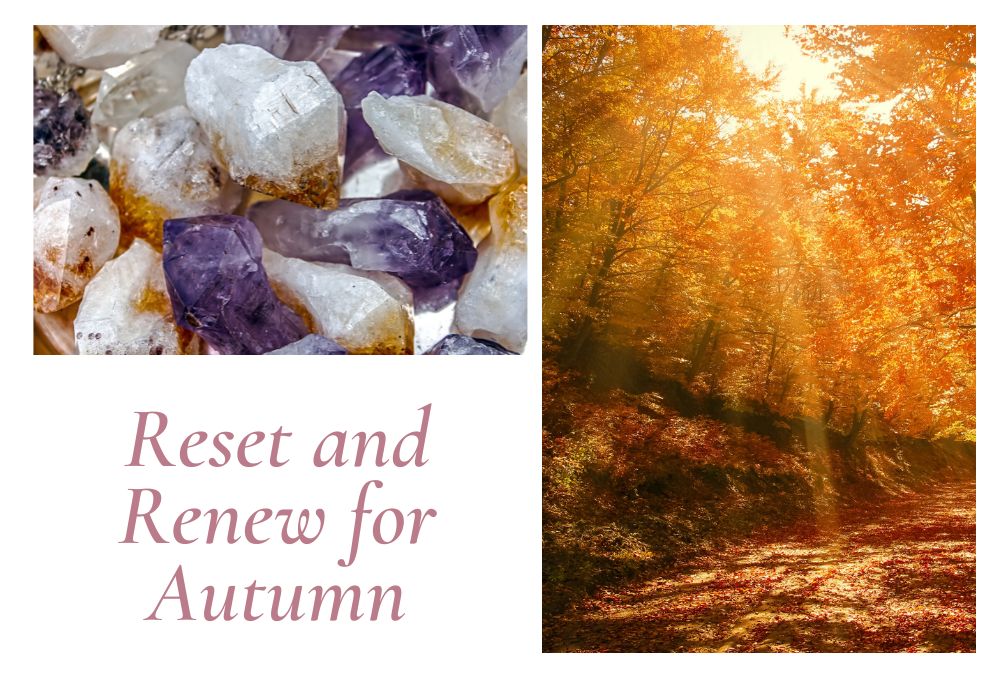
Reset and Renew for Autumn
September is upon us and we cannot deny that [...]

Wow Beauty Loves Skin Alchemists’s Chocolate Cove!
When is a body scrub more than a body [...]

Words of Wisdom from Amanda Rabor
Every month we profile ‘Words of wisdom‘ from a [...]

Light Up Your Skin With Lumity Facial Oil
With a busy life, in these busy times we [...]
Related Posts


About the Author: Wow Beauty & Wellbeing
